
Military surgeon Artem Bagriy, whose call sign was "Kusto," was killed on the front lines
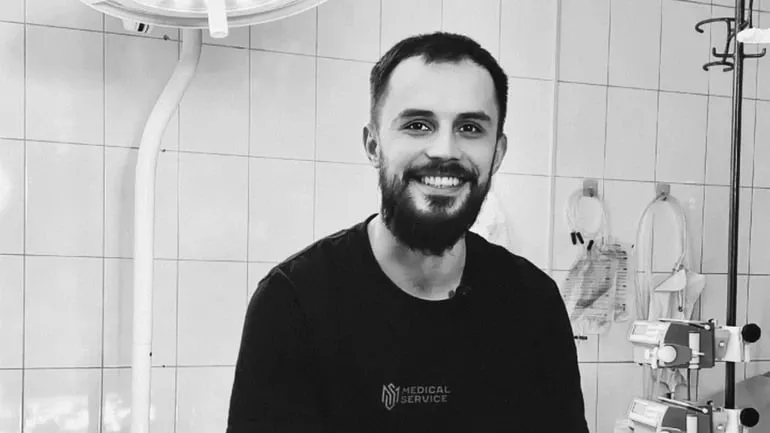
Military surgeon Artem Bagriy, whose call sign was “Kusto,” was killed on the front lines while serving in the 4th Separate Medical Battalion of the Third Army Corps. He was a medic who saved the lives of Ukrainian defenders right in the midst of the war. Colleagues and comrades remember Artem as a man with skilled hands and a sharp mind.
“Pain, sorrow, and emptiness. Thank you, son; you were the best thing in my life. Without you, there’s nothing but an abyss,” wrote the fallen soldier’s father, Andriy Bagriy, in the comments on one of the posts.
In early 2024, Artem joined the 3rd Separate Assault Brigade, where he stabilized and saved the lives of wounded soldiers. And when the 4th Separate Medical Battalion was formed, “Kusto” joined the frontline surgical team.
“For everyone who knew him and shared the daily realities of combat with him, the pain of this loss—caused by the Russians—is excruciating. Our friend ‘Kusto’ combined a bright personality, outstanding intellect, and the skilled hands of a surgeon.
Thanks to his efforts, soldiers were given a chance at a future and a full life, rather than a tragic end. Honor and eternal memory to the Hero! The memory of you will live on forever!”—the brigade wrote.
Combat medic Viktoria Kovach said that Artem always did everything in his power to save the soldiers.
“Everyone who worked with him on any task clearly understands who we have lost. A kind-hearted person with skilled hands and a sharp mind. A person who made sure that soldiers had rehabilitation and a future, rather than just memories and an end,” she noted.
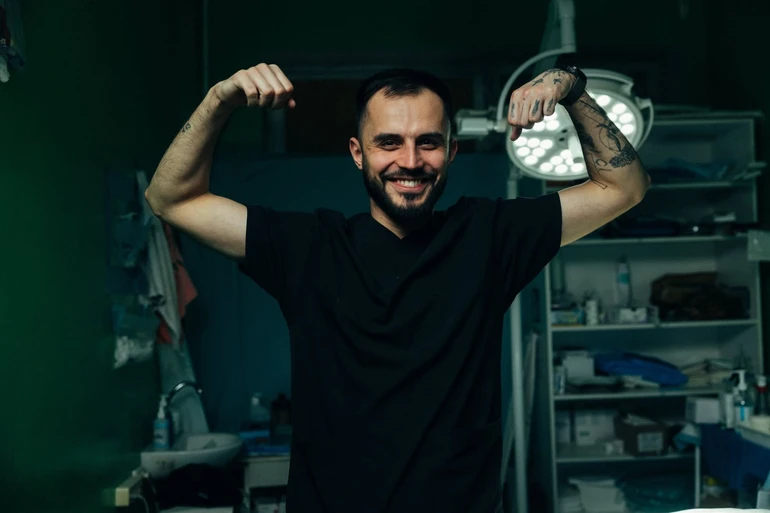
Combat medic and Artem’s former instructor Andriy Nalizhytyi described the deceased as a bright and honest person with a big, kind heart.
“A wonderful young, promising surgeon. Skilled, capable, thoughtful, and eager to learn. [...] Without fear or hesitation, he was wherever he was needed to save the lives of Ukrainian soldiers. At stabilization points, under shelling, in the frontline surgical group (ed.), despite fatigue and exhaustion, he was always ready to go to work. We never had to ask him. He was unfailingly reliable,” the soldier recalled.
His comrade-in-arms, Yaroslav Mogylov, noted that Artem never backed down.
“He knew what it meant to be human. For him, people always came first—not orders, not ranks, not merits. He witnessed a great deal of pain and suffering, and he never backed down. Honest with himself and honest with everyone. He wasn’t afraid to be himself,” the man wrote.
According to combat medic Viktoria Davydova, Artem was always kind to everyone and performed his duties skillfully.
“Kusto, you’ve done so much for this world. I once watched you closely in the field hospital, seeing how skillfully you worked and how attentive you were to every wounded person. Even though we’d been talking much less lately, you were once one of the first people with whom we shared our everyday lives in a frontline town. You were incredibly kind to everyone—to all of us. The world doesn’t realize how much we’ve lost, and we don’t want to accept that you’re gone,” she noted.
Ukrainian soldier Ruslan Romanov died while in Russian captivity.
Vasyl Velychko, a videographer from Poltava, was killed on the front lines. He worked for the local television channels IRT and “Misto Plus” before joining the ranks of the Armed Forces of Ukraine. His wife reported his death on October 16.
Roman Maksymiuk, a former midfielder for the national team and Kyiv’s “Dynamo,” was killed in battles for Ukraine’s independence against Russian terrorist forces. His death was confirmed by DNA testing after a year of searching and hoping for his return.




