
British experts have assessed the consequences for Russia of the destruction of the Crimean Bridge
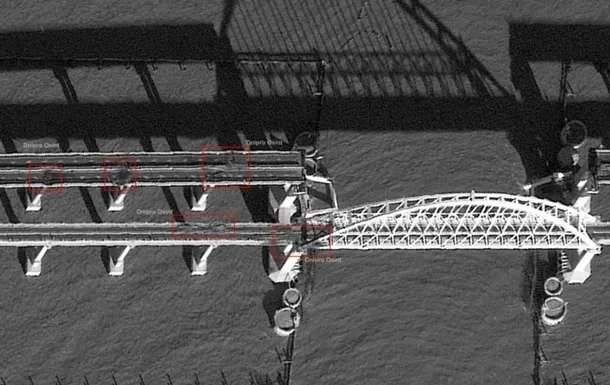
Ukraine’s destruction of the road section of the Crimean Bridge dealt a serious blow to Moscow’s reputation on the eve of Vladimir Putin’s visit to China for a trilateral meeting with Xi Jinping and Donald Trump, and served as a tactical response to Russian strikes on the North and South Bridges in Kyiv. However, it has limited military consequences for Russia
This is stated in a report by the Royal United Services Institute (RUSI).
At the same time, the actual damage to Russia’s military logistics will likely be limited to southern Ukraine—it will be felt most acutely by Russian forces in the occupied parts of the Kherson and Zaporizhzhia regions, whereas supplies to the Donetsk and Luhansk regions are primarily transported by rail directly from Russia.
Analysts note that Russia significantly reduced its use of the road bridge for military purposes as early as the first years of the full-scale war and, by 2024, had ceased transporting most military cargo across it. The surviving railway branch of the bridge, which has also sustained additional damage, has limited capacity and cannot handle the entire cargo flow given that the ferries have effectively been taken out of service, while the R-280 (“Novorossiya”) land bypass route is constantly under attack by Ukrainian drones, causing traffic jams and driving up logistics costs.
In addition, the collapsed span and debris in the shallow waters of the Kerch Strait are blocking the passage of large vessels and preventing Russia from using the grain terminals in the occupied cities of Berdyansk and Mariupol. Despite these difficulties, RUSI experts believe that, due to its centralized allocation of resources, Moscow is more likely to allow a temporary depletion of forces in the south prior to their redeployment, and the large-scale integration of the occupied territories into the Russian economy suggests that the Kremlin is unlikely to agree to their return within the framework of the current negotiations.
Source: report by the Royal United Services Institute for Defense Studies (RUSI).
The Crimean Bridge may not be fully operational until the end of the war.
On the night of November 17, the Crimean Bridge came under attack again, and a section of the bridge’s road arch collapsed into the water.
Robert Brovdy, commander of the Unmanned Systems Forces and known by the call sign “Madyar,” published images of the drones used to strike the Kerch Bridge on November 17. He also revealed the units involved in the joint operation.
Russian dictator Vladimir Putin met with Transportation Minister Dmitry Yadrov shortly after the drone attack on the Crimean Bridge, but did not inquire about the consequences of the strike. Instead, during the meeting in the Kremlin, they discussed the development of the transportation sector and improvements to rail transport, even though trains were delayed for several hours due to the attack.
The Russian dictator’s spokesperson, Dmitry Peskov, commented for the first time on the consequences of the attack on the Crimean Bridge, which took place on November 17. According to him, there are plans to restore the bridge.
The Russian technical community is interested in how the Ukrainian side managed to establish a stable connection in Crimea during the operation on the night of November 17.




