
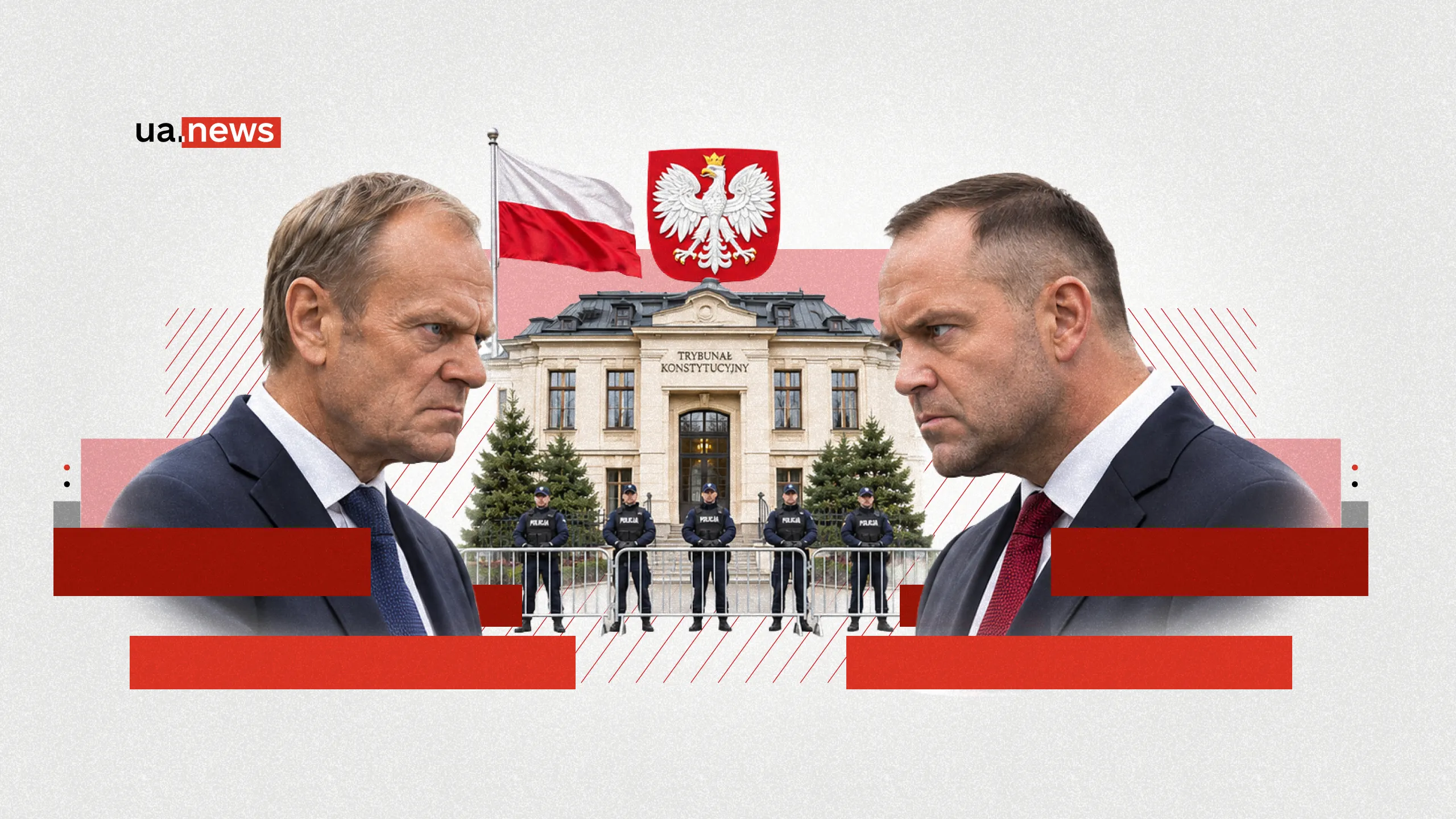
What has been happening in Poland in recent days can honestly hardly be called merely a political dispute or anything of the sort. It is a full-blown constitutional crisis unfolding before our very eyes. One branch of government is accusing the other of usurpation and even a coup d’état; thousands of people are taking to the streets of Warsaw, clashes with police are breaking out, and the country’s president, Karol Nawrocki, has cut short an official visit to Africa and is rushing back home. All of this is unfolding around Poland’s Constitutional Tribunal (the equivalent of Ukraine’s Constitutional Court)—a body that is supposed to be a guarantor of stability but has instead become the epicenter of a political storm.
This is also important news for Ukraine. Poland is one of Kyiv’s key allies, a leading partner, and a neighbor. After all, more than a million Ukrainian citizens live in Poland, and the stability of the Polish government directly affects military aid, the diplomatic situation, and Ukraine’s prospects for European integration. So what exactly happened, why has the conflict surrounding the Constitutional Tribunal actually been dragging on for years, and what threats might this pose in the future? UA.News political analyst Mykyta Trachuk, together with experts, examined the issue.
What Happened in Poland: A Chronology of the Constitutional Conflict
The formal trigger for the current escalation was an event on the evening of October 30, 2026. Judge Anna Korwin-Piotrowska, whom President Navrotsky refuses to recognize as a judge of the Tribunal, announced the temporary suspension of Bogdan Swenczkowski, President of the Constitutional Tribunal, and his deputy, Bartłomiej Sokhansky, from their duties. She cited their failure to fulfill their official duties—specifically, blocking the admission of five newly elected judges—as well as their unwillingness to convene a general assembly of judges to approve the budget.
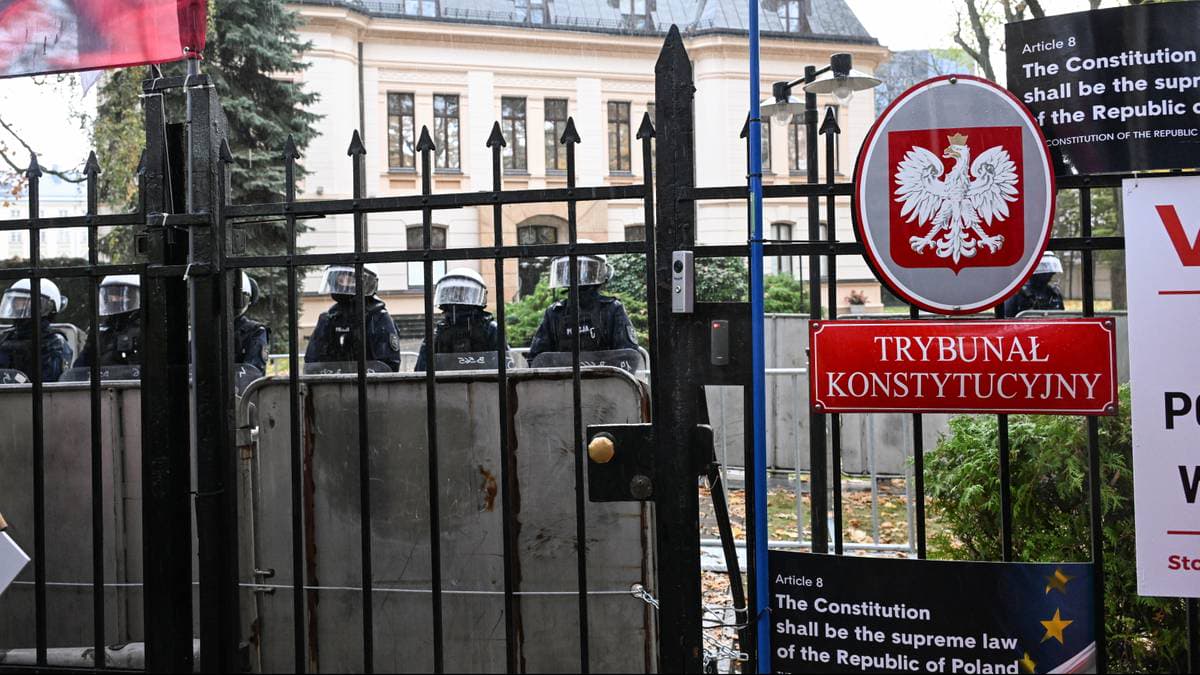
The reaction was immediate. The Tribunal’s official X account, which is controlled by the former leadership, called it an “illegal takeover” and a “coup d’état.” Supporters of the opposition Law and Justice (PiS) party and far-right groups began flocking to the courthouse. The police used force, and some of the protesters were detained. President Nawrocki, who was flying to Senegal on an official visit at the time, turned the plane around and returned to Warsaw. In the middle of the night, he arrived at the Tribunal building, where a heated exchange took place between him and Korwin-Piotrowska.
The next day, Nawrocki issued a statement regarding a “violation of the constitutional order of the Republic of Poland” and a “violent seizure of a constitutional state body.” He convened emergency consultations with the leaders of the parliamentary factions. At the same time, former Prime Minister Mateusz Morawiecki, who is currently a member of the Polish parliament (Sejm), announced that he would initiate a vote of no confidence in Tusk’s government.
Prime Minister Donald Tusk, for his part, issued a statement in which he blamed the crisis on PiS and Navrotsky, declaring that “no one, not even the president, has the right to issue orders to judges or intimidate them.” He emphasized that restoring the rule of law after years of PiS rule is a “difficult process” that requires “decisive action.”
Why This Has Dragged On for Years: An Anatomy of the Constitutional Conflict
To understand why a single judge’s resignation caused such a political uproar, it is worth noting that the conflict surrounding the Constitutional Tribunal has been ongoing since at least 2015. At that time, the PiS party, having just come to power, began appointing its own judges to positions that had already been filled by the previous government. This drew criticism from the EU, which later acknowledged that the Tribunal did not meet the standards of an independent court. Since then, the institution has been effectively paralyzed: rulings are not enforced, the legitimacy of the judges is contested, and the body itself has become an arena for political battles.
After Tusk’s coalition came to power in 2023, the situation was supposed to change. The government promised to restore the rule of law. But President Nawrocki—a PiS ally elected in 2025—stood in the way. This year, the Sejm elected eight new judges to the Tribunal, but Nawrocki refused to swear in five of them, including Korwin-Piotrowska. He justified this by citing doubts regarding the candidates’ compliance with the formal requirements of professionalism and integrity. At the same time, Tribunal President Svenczkowski (a former deputy minister of justice during the PiS era) refused to recognize the new judges and barred them from hearing cases.
Thus, there are effectively two groups of judges in the Polish Constitutional Tribunal: those recognized by the president and the former leadership, and those recognized by the parliamentary majority and, according to the Venice Commission, a significant portion of the legal community. Korwin-Piotrowska, relying on her status as the most senior judge among the “new” group, decided to change the status quo and take control of the Tribunal into her own hands: this is precisely what triggered the current escalation.
Will this affect Ukraine?
The short answer: directly—unlikely, but indirectly—entirely possible. Poland remains one of Ukraine’s key partners, so any destabilization of the Polish political system is bound to affect bilateral relations. However, it is important to understand the nature of this impact.
First, the current crisis is purely an internal matter for Poland. It is a conflict between branches of government that has no direct correlation with foreign policy. Neither Tusk nor Nawrocki is questioning their support for Ukraine. Both sides publicly reaffirm their commitment to partnership with Kyiv. Therefore, it would be incorrect to suggest that Poland will somehow turn away from Ukraine on a broader scale because of this crisis. Although, of course, the entire Polish political elite is currently focused not on foreign affairs but on domestic problems and crises.
Second, political instability in Warsaw could indeed complicate decision-making regarding Ukraine. If Tusk’s government devotes resources to battling the president and the opposition, this could slow the progress of new aid packages or diplomatic initiatives. At the same time, it is worth remembering that the Ukrainian issue in Poland has long ceased to be a matter of consensus: it is the subject of fierce domestic political struggle and debate.
Third, and most importantly: Ukraine should refrain from making any comments or moral and political judgments regarding this crisis. This is an internal matter for the Poles, and outside interference—especially from Kyiv, where the situation regarding the rule of law is, to put it mildly, not the best—could lead to an even deeper conflict with Warsaw.
Moreover, Ukraine has its own experience with similar conflicts surrounding the Constitutional Court. Absolutely every Ukrainian leader has, with varying degrees of success, attempted to rewrite the Constitution to suit their own interests and/or take control of the Constitutional Court. Therefore, the current government, more than anyone else, must understand the sensitivity of such situations and avoid giving grounds for accusations of double standards and meddling in matters that do not concern it.

Expert
Opinions
Political scientist and director of the Institute of World Policy, Yevhen Magda, notes that the constitutional crisis in Poland is more profound than it appears at first glance. He also points out that the political “scramble” surrounding the Tribunal has been going on for over 10 years, and the very person who is now most outraged by what is happening was the first to start “tailoring” its work to his own political needs. It was the Law and Justice party that was the first to do so.
“The situation is indeed complex and is causing serious confrontation. After all, Karol Nawrocki’s publicly announced plans include constitutional amendments that have not yet been put up for discussion. But it is clear that Nawrocki is dissatisfied with the current state of affairs, the current distribution of power in a parliamentary republic, where the president’s position, in his view, is weak. We’ve observed several interesting developments. First, the attempt to change the leadership of the Constitutional Tribunal right on the eve of All Saints’ Day, when 99% of Poles are visiting the graves of their loved ones. Second, Karol Nawrocki was not in Poland, and he even turned his plane around on the way to Senegal to return. This is Donald Tusk’s attempt to secure certain political advantages for himself. Tusk did not expect Nawrocki to return, but Nawrocki began acting like a political fighter of sorts. This issue is personally close to him, and he, by and large, has no choice but to personally appear before the Constitutional Tribunal and confront its judges there.
At the same time, we see that Navrotsky has begun a process of political consultations with parties on the right and left—that is, he is demonstrating the need to find a way out of this situation. Tusk is hinting that he is not inclined to compromise and that there will be a change in the leadership of the Constitutional Tribunal, along with various corresponding measures. There are calls for the Constitutional Tribunal to be restructured. If all parties agree, the question arises: who could serve as an arbitrator in this case? After all, Navrotsky’s position does, after all, more closely reflect that of right-wing forces, and it would be difficult for him to act as an arbitrator in this situation. Therefore, I suspect that this crisis will continue, and its next manifestation will be the Independence March on November 11, which right-wing forces traditionally participate in. And I would advise paying close attention to who will be standing alongside Navrotsky during this march. He participated in it last year, and I think he will definitely participate this year as well,” Magda said.
According to the political scientist, for Ukraine, this crisis—like any crisis that undermines the foundations of Poland’s stability—is a threat, because it poses a threat to our strategic partner.
“So I certainly wouldn’t advise gloating over all this, posting memes, and so on—because, to be honest, we’re in somewhat different political situations anyway,” concluded Yevhen Magda.
Political expert and deputy director of the Ukrainian Institute of Politics (UIP), Vladislav Dzvidzinsky, who currently resides in Poland, is convinced that the issue at hand is the ability to pass most laws and interpret certain provisions of the Constitution, which serve as touchstones for Polish society.
“The essence of the conflict is that there is an ongoing struggle for control over the court and for its legitimacy. The parliamentary majority, led by Donald Tusk, recently appointed new judges. And President Navrotsky, in accordance with the balance of powers in the state, is required to administer their oath of office, but he has not done so. Consequently, the leadership of the Constitutional Court has barred the newly appointed judges—selected under the parliamentary majority’s quota—from taking up their posts. In late October, the situation escalated, and one of the judges, Anna Korwin-Piotrowska, went so far as to announce the suspension of Constitutional Court President Bogdan Senchkovsky. After that, the news immediately reached President Navrotsky, and he cut short his international visit. He returned to Poland, visited the court building, and protests and clashes took place around that building.
In essence, we have two political sides, two branches of government in Poland, and each side interprets this event in the opposite way. The government, together with Tusk, speaks of restoring the rule of law, the need to fill the vacancies on the Constitutional Court, and to ensure the legitimacy of the judges. For our readers to understand, it is important to know that this confrontation did not arise suddenly. In fact, we need to go back to 2015, when the then-ruling Law and Justice party shifted the balance within the judicial system. But Tusk’s rise to power at the beginning of this term effectively initiated a reversal of that process—that is, a rollback of what had been done in 2015. “The problem now is that each political side considers its own personnel and decisions to be legitimate, while viewing the decisions of the other branch of government as illegal and illegitimate. This conflict and the lack of balance are the correct way to describe what is happening and why,” the expert notes.
At the same time, according to the political scientist, the greatest risks currently being discussed by some sources do not actually exist. There is no need to speak of a government collapse, an escalation of tensions, or a risk to the country’s political stability. This is, rather, an institutional crisis.
“And most importantly—all of this is happening on the eve of the 2027 elections. Since the end of the Law and Justice Party’s one-party rule, Poland has been undergoing a constant transition from one political force to another over the past few political cycles. In other words, the opposition and the ruling parties—both in parliament and in the presidency—are taking turns in power. All these events are part of an early effort to build a voter base and position themselves ahead of the 2027 elections. In the near future, I would expect a continuation of a certain confrontation between these branches of government and the two political camps in the legal and political spheres. There will likely be attempts to reach agreements and mobilize supporters of their respective political forces. This gathering will reveal the direction the conflict is taking, but one should not expect it to be resolved or for a quick resolution to occur. After all, this would require not only an agreement on the legitimacy of the judges but a comprehensive agreement overall. And everyone is trying to demonstrate their political clout to Polish society.
In closing, I’ll say that for Ukrainians, this is clearly an unfavorable and unpleasant situation, since Poland is sinking deeper into an internal political crisis, prioritizing its national agenda, and beginning the countdown to the parliamentary campaign. Consequently, the issue of any strategic or foreign partnership can only be used as a trigger, which is not a positive development. In the strategic and legal spheres, Poland is a key partner in addressing Ukraine’s pressing problems. But this process is inevitable. We will continue to monitor how it unfolds,” concluded Vladislav Dzvidzinsky.

In summary, the current constitutional crisis in Poland is the natural result of years of accumulated contradictions surrounding the Constitutional Tribunal. One side’s attempt to forcibly seize control of an institution that the other side considers illegitimate has led to open street confrontations, police intervention, and claims of a “coup d’état.” With a year to go before parliamentary elections (it is possible that this is precisely why the problem has escalated right now), this is an extremely dangerous precedent that could permanently divide Polish society.
For Ukraine, this situation serves as a reminder of just how important political stability is in partner countries. Poland remains a key ally for Kyiv, but its internal problems could indirectly complicate bilateral cooperation. Therefore, the wisest strategy for Kyiv is to remain neutral and not interfere in Warsaw’s internal affairs.




