
Starlink service in Ukraine may be restricted again after the U.S. election
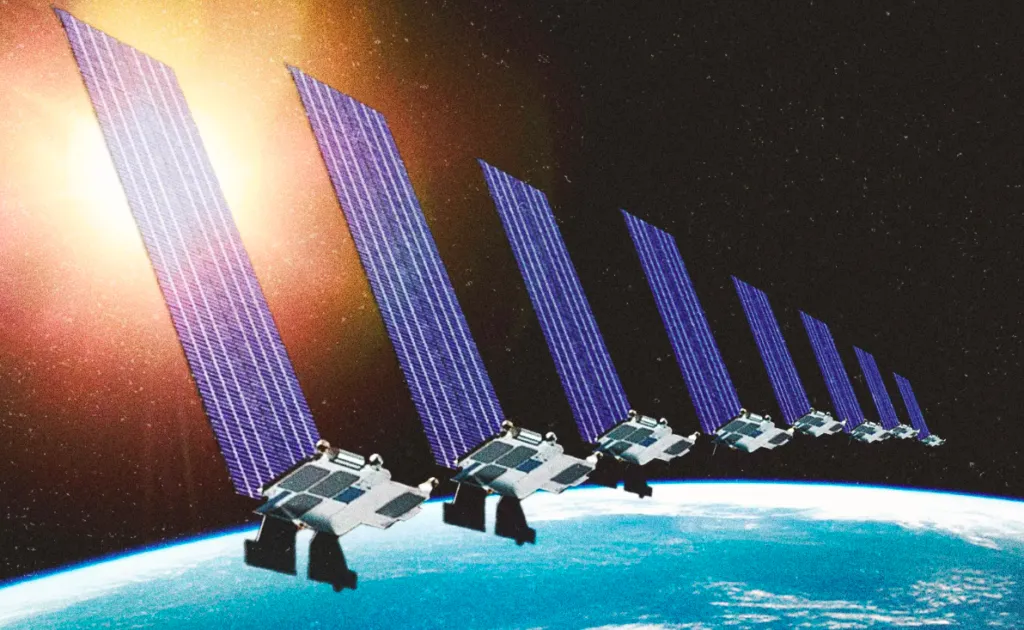
Despite the resumption of Starlink operations in Ukraine, the risk of new restrictions on satellite communications remains. Ahead of the U.S. congressional elections, the standoff surrounding Elon Musk—whose business depends on U.S. government contracts—is intensifying.
American political analyst Yuriy Rashkin explained on Channel 24 why Elon Musk’s situation could change after the November 3 vote. He also suggested that the stability of satellite communications for the Ukrainian military could once again be at risk.
Polish Foreign Minister Radosław Sikorski publicly responded to Elon Musk, who had accused Ukraine of corruption and questioned the use of U.S. funds. The Polish diplomat pointed out that European countries pay for the satellite communications services used by Ukraine, rather than receiving them for free.
Rashkin supported Warsaw’s response. He believes that European allies need to openly express their disagreement with the decisions of the U.S. administration, as silence can only encourage Donald Trump to exert further pressure.
“Poland needs to make statements, to show that it is dissatisfied with what is happening. Otherwise, Trump will assume that you’re probably fine with everything. In other words, you’re weak, you stay silent, you don’t speak up. But you need to speak up,” Rashkin explained.
The situation is also becoming more complicated for Musk himself. According to the columnist, the billionaire is now far more dependent on the U.S. president than Trump is on him, despite the SpaceX owner’s enormous political influence.
Rashkin attributes this dependence not only to the financial interests of Musk’s companies but also to his involvement in American politics. The billionaire has invested hundreds of millions of dollars in supporting election campaigns, while his businesses continue to receive substantial government contracts.
“The guy has good contracts with the government. But contracts can be taken away, and Elon Musk needs to understand that. That’s why he’s invested over $400 million in this election,” the American analyst noted.
According to Rashkin’s assessment, supporting Trump has become a way for Musk to protect his long-term business interests. However, this strategy may not work if the U.S. president’s political standing weakens after the election.
A coalition of representatives from both U.S. political parties is already forming to counter Musk’s influence. Republicans and Democrats, as the analyst explained, could use their legislative powers to scrutinize his companies’ activities, government contracts, and potential conflicts of interest.
Despite the restoration of satellite communications, Rashkin does not consider the problem fully resolved. The next test will be the U.S. congressional elections, after which the political landscape may change.
The analyst suggests that the current restoration of the system’s operation does not guarantee its stability going forward. He proposed assessing the situation the very next day after the vote, when it will become clearer how relations between Trump, Musk, and U.S. lawmakers will develop.
“Starlink is back online, but there’s very little time left before the election. So let’s see if Starlink will be available on November 4. That’s the first thing,” Rashkin noted.
The problem extends far beyond this latest conflict. Ukraine and its partners rely heavily on SpaceX technology, and developing a fully-fledged alternative requires significant resources and time.
Even companies trying to compete with Musk in the satellite industry use SpaceX rockets to launch their own satellites. According to Rashkin, this situation is the result of years of insufficient development of independent technological capabilities.
European partners are already discussing the creation of their own satellite communication systems, particularly to meet Ukraine’s needs. Canada also plans to develop similar projects, but their implementation cannot immediately eliminate the current dependence.
“Canada is now getting ready to do something. They’ve provided funding, but they won’t start taking action until closer to the end of the year. And we’re talking about November 3. This precisely shows that Putin has a window of opportunity that is gradually narrowing,” the American analyst explained.
Rashkin believes that the Kremlin may try to exploit the period of political uncertainty in the U.S. while alternative satellite communication technologies remain unavailable on the necessary scale.
European countries are already exploring options to provide Ukraine with independent satellite communications. However, until such systems are in place, Ukraine’s defense will continue to rely on existing infrastructure, and its stability will remain a key issue following the U.S. election.
Source: Channel 24
As a reminder, Musk explained that the restrictions on Starlink for the Ukrainian Armed Forces were due to the risk of retaliatory strikes.
Earlier, Zelenskyy described how they managed to unblock Starlink.
Meanwhile, Ukraine’s Ministry of Defense confirmed that Starlink service has resumed at speeds exceeding 400 km/h.
As a reminder, U.S. President Donald Trump personally called SpaceX founder Elon Musk, demanding that he lift the speed and operational restrictions on Starshield—the military version of the Starlink satellite system for the Ukrainian military.
Canadian Prime Minister Mark Carney stated that the situation with Starlink during the war in Ukraine has heightened Ottawa’s concerns about its dependence on foreign technologies. He emphasized the need to diversify suppliers to protect the country’s sovereignty.




