
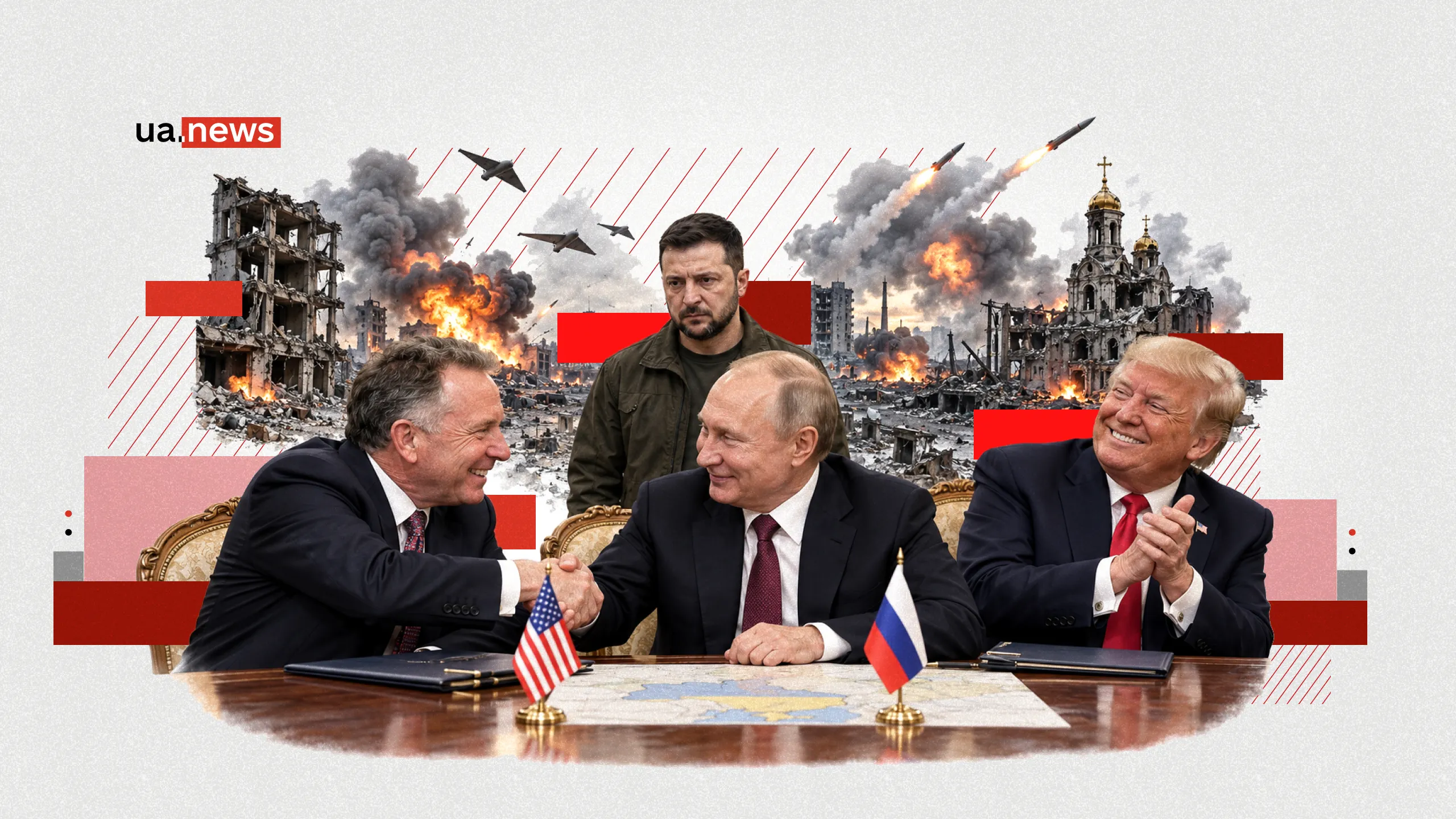
As of the end of October, diplomatic efforts to end the Russian-Ukrainian war had picked up again. On October 20, President Zelenskyy held talks in Oslo with European partners and representatives of the U.S. administration, Steve Witkoff and Jared Kushner. The next day, Witkoff met with Putin. The Kremlin subsequently announced its willingness in principle to resume negotiations involving Russia, Ukraine, and the United States. However, a willingness to continue the dialogue does not yet mean that the parties are close to agreeing on the terms of peace.
The main point of contention remains unchanged: Ukraine seeks an end to the war while preserving its sovereignty and securing reliable security guarantees, whereas Russia continues to make territorial demands and links a settlement to a broader restructuring of the entire European security system. The U.S. is trying to bring the parties back to the negotiating table, but so far there are well-founded doubts that these efforts will lead to a compromise.
What is happening around the current negotiation process, and can the current diplomatic activity lead to agreements that will finally end the war? UA.News political analyst Mykyta Trachuk examined the issue.
Negotiations Resume—Fundamental Disagreements Remain
Meetings in Oslo, St. Petersburg, and other locations indicate a deep and full-fledged resumption of contacts between key participants in the peace process. During the talks in Norway, security issues were discussed, including countering Russian ballistic attacks, early warning of threats, problems with satellite communications, and more. At the same time, no fundamental agreements were publicly announced—consultations are ongoing.
Following Witkof’s meeting with Putin, the Kremlin announced its readiness to resume the trilateral format of negotiations. The Russian side insists that any future agreement must take into account its vision of long-term security. Putin also stated that the negotiations should cover the security not only of Russia and Ukraine, but also of Europe as a whole. The Russian leader also reiterated that he allegedly has no intention of going to war with Europe—though, incidentally, this “humanist” (in Witkoff’s terminology) said the same thing about Ukraine.
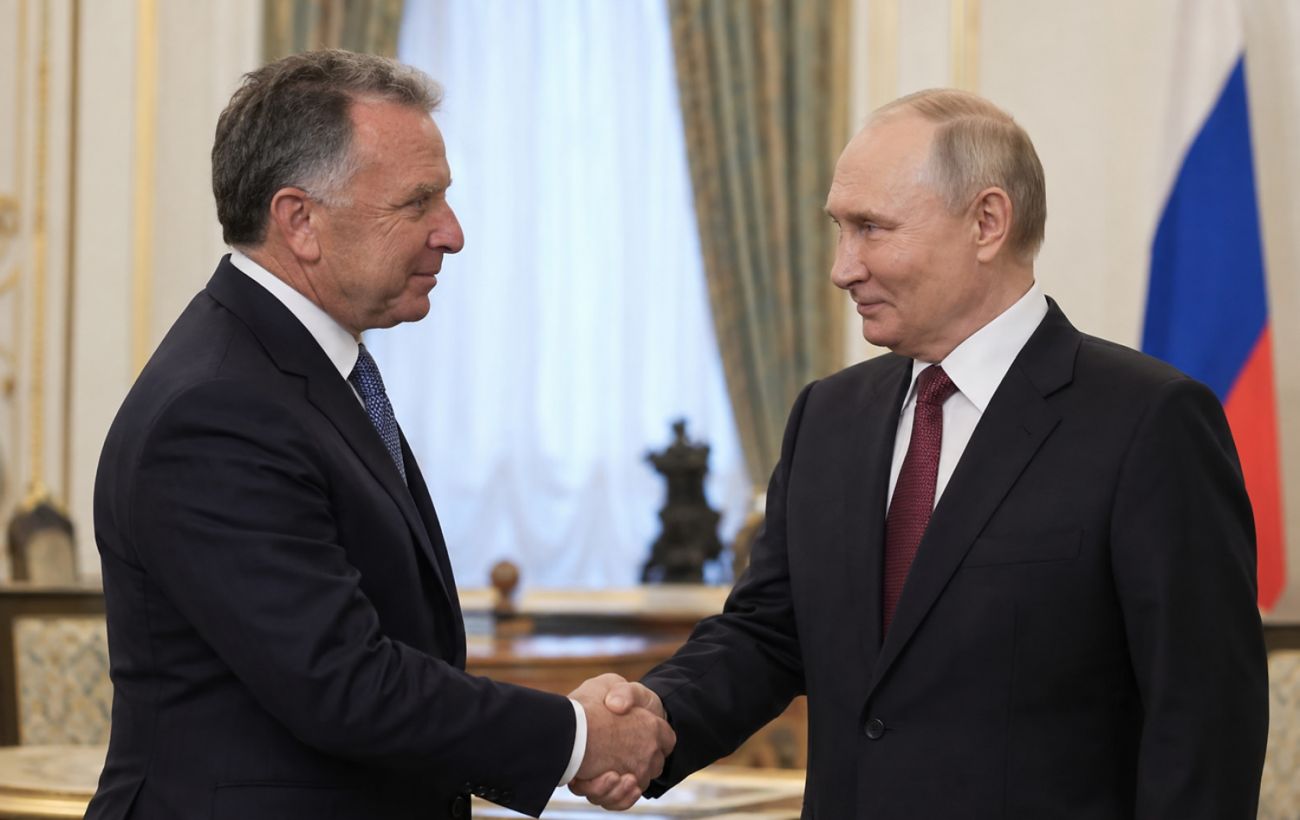
Overall, this position poses a serious problem for Kyiv. Moscow views the war not so much as an act of aggression against Ukraine as part of a global confrontation with the West. As a result, the issue of Ukraine’s territorial integrity is directly linked to Russia’s demands regarding NATO, the U.S., and the new contours of European security (no one asked the Europeans themselves). Kyiv insists that Ukraine cannot be the subject of agreements between major powers: decisions regarding its territory and future must be made with the direct participation of the Ukrainian side. Yet world history shows that decisions by powerful international players have often been made at the expense of weaker actors in global politics. Therefore, caution is warranted here.
The territorial issue remains the most complex. Russia continues to demand concessions regarding the Donbas, while Ukraine consistently rejects the transfer of territories under its control. Zelenskyy traditionally proposes a “status quo” approach—that is, a de facto freeze on the conflict. There is no public indication that the parties have found an acceptable formula for resolving this dispute.
At the same time, negotiations could begin with limited steps: humanitarian agreements, the exchange of detainees, mechanisms to monitor the ceasefire, or a reduction in the intensity of strikes on specific targets. Such measures can reduce civilian casualties and lay the groundwork for further dialogue. However, they will only make sense if there is reciprocity, monitoring of compliance, and clear consequences for violating the agreements. And, of course, provided the Kremlin agrees to this. The latter, however, is currently lacking.
So the current stage is more of a return to the negotiating table and a process of “testing the waters.” A diplomatic window has opened slightly once again, but the fundamental differences are still far from being resolved.

Trump’s
Interests and the Risk of a “Great Power Compromise”
It’s worth keeping in mind the “elephant in the room,” which can explain a great deal of what is happening. We are witnessing an intensification of diplomatic activity precisely on the eve of the U.S. midterm congressional elections, scheduled for November 3, 2026. For Trump, any high-profile foreign policy achievement could serve as a key argument in the domestic political arena. At the same time, it would be wrong to claim that the elections—and they alone—are the main reason for the current flurry of negotiations. It is one of the most important factors, yes, but it stands alongside the U.S. president’s long-standing desire to de-escalate the conflict and demonstrate the effectiveness of American diplomacy.
For Washington, a swift end to nearly five years of hostilities would be a remarkable political achievement. For Ukraine, however, the criteria for success are different: it is necessary not only to stop the fighting (although that in itself would be a huge boon for Ukrainians), but also to reduce the risk of a new Russian attack. If the agreement does not include effective security guarantees, a ceasefire would simply be meaningless. However, media reports indicate that Trump is, in fact, agreeing to provide Ukraine with such guarantees on a par with NATO’s Article 5.
Europe must also play an independent role. Its participation is needed not only to provide comprehensive support to Kyiv but also to ensure long-term guarantees: military aid, the development of defense production, financial stability, intelligence cooperation, and so on. If Europe remains on the sidelines of future potential agreements, there will be a risk that decisions will be made by some states, while others will bear a significant portion of the responsibility for their implementation. That is precisely why it is high time for the EU to shift its paradigm and move toward more pragmatic solutions as negotiations with Russia begin.
The possibility of a meeting between Trump, Putin, and Xi Jinping on the sidelines of the APEC summit in Shenzhen, China, on November 18–19 is drawing additional attention. The summit itself has already been scheduled, but the trilateral meeting has not yet been finalized. If it does take place, however, it could have enormous implications for global politics as a whole. However, it is premature to speak of a “new Yalta”: the mere fact that Trump, Putin, and Xi meet will not mean that they have agreed on a division of spheres of influence or have a joint plan regarding Ukraine—although some leaders clearly aspire to this.
Therefore, the risk of a “great-power compromise” cannot be ignored. Sooner or later, the Ukrainian issue may become part of broader agreements between Washington, Moscow, and Beijing. It is crucial for Kyiv to prevent decisions about its own future from being made without its participation.

What Ukraine Can Expect: Key Scenarios
In the near future, negotiations will most likely focus on agreeing on an agenda, the format of future meetings, and finding at least some common ground. For now, unfortunately, there is no reason to expect a peace agreement to be signed anytime soon. The most realistic expectation is that contacts will continue, during which the parties will test each other’s willingness to make concessions.
Currently, three main scenarios are emerging.
The first is limited diplomatic progress. The parties resume trilateral negotiations, agree on humanitarian measures, and/or attempt to reduce the intensity of attacks. Even without a final resolution of the territorial issue, this could save thousands of lives and lay the groundwork for further dialogue.
The second is empty “talk” without any real convergence of positions. The participants continue to meet, but each uses the process to advance their own agenda. This is exactly what has happened every time before. In this case, the result could be yet another “agreement to agree,” just as it has always been before.
The third scenario involves increased external pressure on Ukraine to reach a quick agreement. Trump is already trying to pursue this path. In particular, there have recently been issues with the transfer of U.S. intelligence data—which provides early warnings of missile launches—as well as with Starlink’s speed on the front lines. However, according to Zelenskyy, the situation is now gradually improving. Nevertheless, these issues can be viewed as a clear attempt to pressure Zelenskyy.
Kyiv’s key task is to define the criteria for the acceptability of any agreement. First and foremost, concrete security guarantees are needed: who will assist Ukraine in the event of a new attack, how, and under what conditions. Equally important are mechanisms for monitoring the ceasefire, the consequences of violating the agreement, and preserving Ukraine’s ability to defend itself.
It is also necessary to distinguish between a ceasefire and a full-fledged peace. The former may halt hostilities, but it does not necessarily eliminate the causes of the conflict. If the agreement does not include effective monitoring and deterrence mechanisms, it risks becoming merely a lull before a new round of war.
The public legitimacy of future decisions also remains crucial. It appears that the government understands this, as Zelenskyy regularly states that any issue regarding a peace treaty with Russia—which could involve the loss of some territories—must be put to a nationwide referendum. However, the nuances surrounding a referendum are the same as those surrounding elections during wartime: the enforcement of martial law and all the restrictions and prohibitions it entails. Therefore, should this issue come to the fore, it will be necessary to consider this aspect as well.

In
summary, as of today, there are grounds to speak of a significant revival of diplomatic efforts to end the war with Russia. The negotiations in Oslo, Witkof’s meeting with Putin, Moscow’s stated willingness to resume trilateral contacts, and plans for a summit in Shenzhen collectively create opportunities and, it seems, are opening a diplomatic “window of opportunity” for a settlement.
However, key disagreements regarding territories, security guarantees, and the future architecture of European security remain unresolved. And without a full-fledged peace, there will be no resolution, since neither side will simply agree to it. Therefore, unfortunately, the most likely scenario for now is continued diplomatic activity resulting in an “agreement to negotiate.”
This does not mean that the negotiations are doomed to failure, or that they are unnecessary at all. The renowned Soviet diplomat Andrei Gromyko once said that even 10 years of bad negotiations are better than one day of “good” war. Diplomacy is necessary in any case, since sooner or later it may lead to some kind of agreement. However, there remains, unfortunately, a vast gulf between simply resuming contacts and achieving full-fledged peace, and this must be understood.




