
Ukraine Has Found a Way to Bypass Restrictions on the Use of Starshield Over Russia – Fire Point
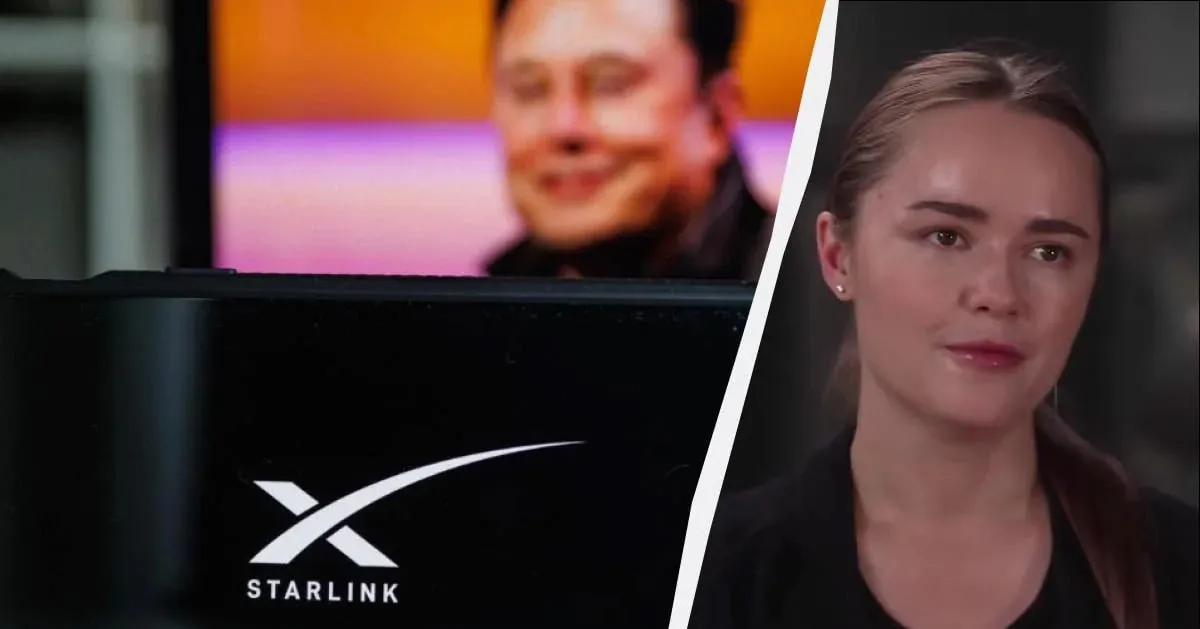
Ukrainian arms manufacturer Fire Point has called on SpaceX to expand the coverage of the Starshield military satellite network beyond Ukraine’s borders. The company emphasized that it uses this system exclusively for military purposes.
“If we had the opportunity to extend Starshield licenses not only to the temporarily occupied territories but also a little further—for example, 200–300 kilometers— it could significantly impact how Ukraine counters Russia’s ballistic attacks on the civilian population,” Fire Point CEO Iryna Terekh told the publication.
She emphasized that Ukraine uses the Starshield system solely for military purposes. The license for its use is issued and monitored by the Ukrainian Ministry of Defense. It functions similarly to an end-user certificate, which ensures government oversight.
Terekh explained that limiting the use of Starshield solely to Ukraine’s temporarily occupied territories, while helpful to Kyiv, does not solve the main problem—targeting locations within Russian territory. This is because it is from these regions that the enemy launches the majority of its ballistic missiles.
“It is important to understand that the lives of hundreds and thousands of Ukrainians actually depend on a single political decision that would not significantly harm the U.S. administration,” Terekh emphasized.
She reported that Fire Point has already found a workaround to counter U.S. restrictions on Ukraine’s use of Starshield. However, she added, this solution provides only 15–20 percent of Starshield’s capabilities. Terekh did not specify exactly what this workaround entails:
“We’re trying to get the most out of this workaround. But it cannot replace Starshield as a full-fledged alternative, either in terms of cost or scalability.”
Terekh also commented on Ukraine’s development of the FP-7 ballistic missile, which has a range of up to 250 km. According to Terekh, this missile has already passed its first combat tests.
“We conducted our first launch from the battlefield. We collected a great deal of useful data. We’ve made some updates, and we’re preparing for the next one. And I think this will be the final phase of the testing program, after which we’ll be ready to sign a contract and begin mass production,” Terekh said.
As for the FP-9 ballistic missile, which has a range of up to 850 km, Terekh said its first combat test is scheduled to take place by the end of this year.
This was reported by Breaking Defense, citing the company’s CEO.
The U.S. is preparing an investigation into Musk’s activities related to Starshield in Ukraine, according to CNN.
Restrictions on Starshield have halted the operation of 2,000 Bars interceptor drones, according to Zelenskyy.
U.S. lawmakers have called on the Pentagon to guarantee Ukraine access to Starlink and Starshield.
As a reminder, U.S. President Donald Trump personally called SpaceX founder Elon Musk, demanding that he lift the speed and operational restrictions on Starshield—the military version of the Starlink satellite system—for the Ukrainian military.
A Pentagon inspector rejected a request regarding Starlink’s operation in Ukraine — Interia
Rubio stated that Ukraine does not yet have access to Starshield




